- English
- Español
- Português
- русский
- Français
- 日本語
- Deutsch
- tiếng Việt
- Italiano
- Nederlands
- ภาษาไทย
- Polski
- 한국어
- Svenska
- magyar
- Malay
- বাংলা ভাষার
- Dansk
- Suomi
- हिन्दी
- Pilipino
- Türkçe
- Gaeilge
- العربية
- Indonesia
- Norsk
- تمل
- český
- ελληνικά
- український
- Javanese
- فارسی
- தமிழ்
- తెలుగు
- नेपाली
- Burmese
- български
- ລາວ
- Latine
- Қазақша
- Euskal
- Azərbaycan
- Slovenský jazyk
- Македонски
- Lietuvos
- Eesti Keel
- Română
- Slovenski
- मराठी
- Srpski језик
China High-quality Long magic balloon Factory
Professional Long Magic Balloons for Wholesale | 260Q Twisting Balloon Manufacturer
As a professional China long magic balloon manufacturer with 19 years of production experience, NiuN® supplies wholesale 260Q twisting balloons, 160Q fine-detail modeling balloons and bulk custom magic balloon assortment packs. Our premium thick-latex magic balloons feature consistent thickness, twist resistance and batch-stable colors, fully CE/EN71 certified. Ideal for party retailers, entertainers and event companies to source and stock up. Request free samples and factory quotes today.
Long magic balloons — also known as twisting balloons, modeling balloons or 260 balloons — are extra-long thin natural latex balloons designed to be twisted, folded and shaped into sculptures such as animals, flowers, swords and hats. As a leading China long magic balloon manufacturer, Borun Balloons (NiuN®) produces professional-grade 260Q magic balloons trusted by entertainers, party supply wholesalers and event companies worldwide.
The industry standard size 260Q measures approximately 2 inches in diameter and 60 inches long when fully inflated. Our flagship 260Q magic balloons are available in over 30 colors, with 160Q, 350Q and 646Q sizes available for different sculpting needs. Formulated with extra-thick latex specifically for twisting durability, our magic balloons hold their shape reliably without popping during complex multi-twist designs.
If you are sourcing magic balloons for a party supply store, entertainment company or balloon artist supply shop, this guide covers everything you need to know about sizes, quality standards, color options and what to look for in a reliable wholesale magic balloon supplier.
Get Wholesale 260Q Magic Balloon Price List & Free Samples Within 24 Hours
Core Advantages of Our Professional-Grade Magic Twisting Balloons
Not all long twisting balloons perform well. Cheap models pop constantly, fail to hold shape and suffer from inconsistent thickness. Our professional-grade magic balloons are engineered specifically for repeated twisting and sculpting, and are built to the standards of professional balloon artists.
Extra-Thick Latex Formulation
Quality 260Q magic balloons weigh 2.5–3.0g each — thicker than standard round balloons — to prevent popping mid-sculpture during repeated twisting and folding.
Uniform Full-Length Diameter
Consistent wall thickness from neck to tip. No tapered thin ends that cause unreliable advanced twists and frequent tip popping during tight bends.
Balanced Stretch & Memory
Perfect balance of flexibility and shape retention — flexible enough to twist smoothly, firm enough to hold sculpted shapes for hours without unraveling.
Long Uninflated Neck
4–6 inch uninflated tip gives air room to shift as you twist segments. This is the critical design detail that prevents magic balloons from popping during sculpting.
Batch-Consistent Colors
Locked color formulas ensure identical shades across reorders. Professional balloon artists rely on consistent color accuracy for their brand and event quality.
Safety Certified & Eco-Friendly
Made from 100% natural latex, fully compliant with EN71-12, CE, REACH and CPSIA standards, naturally biodegradable under proper environmental conditions.
Full Size Range & Quality Grade Comparison
Magic twisting balloons are not one-size-fits-all. Different diameters and lengths serve different sculpting purposes. The numbering system describes approximate size: the first digits indicate inflated diameter in inches, the last digits indicate length in inches.
| Size Code | Diameter × Length | Typical Weight | Best Used For | Market Popularity |
|---|---|---|---|---|
| 160Q | 1" × 60" | 1.5–1.8g | Fine details, small sculptures, ears and tails | Medium (specialty) |
| 260Q | 2" × 60" | 1.8–2g | All-purpose twisting — animals, flowers, swords | Highest (industry standard) |
| 360Q | 3" × 50" | 3.5–4.0g | Large sculptures, thicker body shapes | Medium |
| 646Q / Giant | 6" × 46" | 7–9g | Jumbo sculptures, parade balloons, costumes | Low (specialty) |
| 321Q / Bee Body | 3" × 21" | ~2g | Short body segments, character designs | Low (niche) |
The 260Q is by far the most universal size — the workhorse of balloon twisting and the standard starting size for beginners. Most professional entertainers rely primarily on 260Q magic balloons and keep 160Q on hand for fine details like ears, noses and small appendages.
Premium vs. Budget Long Magic Balloons Comparison
Many first-time buyers get burned by low-priced magic balloons that underperform. Below is a clear breakdown to help you choose the right grade for your customer base when you wholesale magic balloons.
| Comparison Item | Our Premium Grade Magic Balloons | Budget Grade Magic Balloons |
|---|---|---|
| 260Q Unit Weight | 1.8g | Under 1.8g |
| Wall Thickness Consistency | Uniform full-length, deviation ±8% | Tapered thin tip, uneven thickness |
| Continuous Twist Resistance | 10+ basic twists without popping | 3–5 twists, high pop rate |
| Shape Retention Time | 6–12 hours at room temperature | 2–4 hours, easy to unravel |
| Batch Color Consistency | ΔE ≤ 2, visually identical | Obvious shade difference between bags |
| Suitable Scenarios | Professional performances, premium retail | Casual kids' play, low-cost events |
Popular Colors & Best-Selling Assortment Packs
Our modeling magic balloons are available in four finish families with over 30 standard colors, plus custom Pantone matching for brand clients. We keep large stock of best-selling shades for fast bulk order fulfillment.
Standard Solid Colors (Most Popular)
Red, blue, yellow, green, orange, purple, pink, black, white. These are the core basics every entertainer starts with. Standard rainbow assortment packs of 10–12 colors are the all-time best sellers for retail and bulk distribution.
Pastel / Macaron Colors
Soft pink, baby blue, mint green, lavender, cream. Fast-growing in popularity for elegant events, weddings and upscale children's parties where bright primary colors feel too casual.
Metallic / Chrome Colors
Gold, silver, rose gold, metallic blue. Premium option for fancy events and photoshoots. Metallic twisting magic balloons photograph beautifully and command higher retail prices.
Neon / Fluorescent Colors
Neon pink, neon green, neon orange. Ideal for glow parties, blacklight events and festivals, with vivid brightness under UV lighting.
Most retail and starter packs are sold as assorted rainbow sets. Professional artists typically buy single-color bulk packs of their highest-usage shades — red, black and white tend to run out fastest.
Manufacturing Process & Strict Quality Control
Long magic balloons are manufactured differently from round balloons due to their extreme length-to-width ratio. Our Xiongxian factory operates dedicated production lines with specialized equipment for twisting balloons, giving us complete control over quality and lead time.
- Specialized Latex Formulation — Thicker, higher-tensile latex blend with extra vulcanizing agents and elasticity boosters to withstand repeated twisting without tearing. Formula precision is the #1 factor in twisting performance.
- Long Mold Dipping — Extra-long cylindrical molds (60+ inches for 260Q) dip vertically into the latex tank at controlled speed and depth to ensure uniform wall thickness along the full length, preventing gravity-induced pooling.
- Vertical Controlled Drying — Long molds dry in fully vertical position to prevent sagging and uneven thickness. Drying tunnel temperature and speed are calibrated specifically for long balloon shapes.
- Bead Rolling & Stripping — A clean rolled lip is formed at the opening, then the long balloon is carefully stripped off the mold using specialized equipment to avoid tearing.
- Post-Vulcanization Curing — Full secondary steam cure maximizes elasticity and tear resistance. This step gives magic balloons the shape memory to hold twisted forms instead of springing back.
- Length Sorting & Twist Testing — Every batch is inspected for consistent length, thickness uniformity and inflation performance. We perform actual twist tests on samples, not just basic inflation checks.
How to Evaluate Magic Balloon Quality
When evaluating a new magic balloon supplier, you can run these simple tests with sample balloons to verify real-world performance before you place a bulk order.
1. Inflation test — Fully inflated magic balloons should reach the advertised length with uniform thickness end to end. Noticeably thinner tips indicate low quality.
2. Twist test — Perform 5–10 basic twists in a row. Quality twisting magic balloons twist smoothly and hold each twist without popping or audible stretching.
3. Shape retention test — Make a simple dog sculpture and set it aside. After 2–3 hours it should still hold its basic shape without significant untwisting.
4. Color consistency check — Inflate 10 magic balloons from the same pack and compare. Visible shade variation means poor batch control.
5. Weight check — Quality 260Q magic balloons should weigh 2.5–3.0g each. Under 2.2g means they are too thin for professional use.
Source Professional-Grade Twisting Magic Balloons Directly From the Factory
Applications & Who Buys Wholesale Magic Balloons
Bulk long magic balloons serve a wide range of B2B customers, from professional entertainers to large retail chains. Understanding your customer profile helps you select the right SKU mix and maximize inventory turnover.
Professional balloon twisters & entertainers — The core market. Clowns, children's entertainers and balloon artists buy magic balloons by the thousands. They are extremely quality-sensitive because popped balloons ruin live performances.
Party supply retailers — Party stores sell assorted 260Q magic balloon packs, often bundled with a small pump and instruction sheet. Rainbow assortments are the top sellers for home use and kids' birthdays.
Event planners & decor companies — Used for balloon walls, garland details, centerpiece accents and on-site event entertainment. Twisting balloons create custom shapes that round balloons cannot achieve.
Children's activity & education — Schools, daycares, camps and children's museums use magic balloons for craft activities. Bulk assorted bright color packs are the standard for this segment.
DIY & hobby market — Fast-growing thanks to social media tutorials. Hobbyists buy beginner starter packs with pumps and guides, driving strong retail assortment pack growth.
Theme parks & family entertainment centers — High-volume buyers. Theme parks, arcades and family restaurants with on-site balloon artists go through thousands of twisting magic balloons per month.
Full Customization & OEM Services
As a direct factory, we offer full OEM customization for magic balloon products to help you build your own brand and product line. Our in-house design team supports packaging artwork refinement at no extra charge.
1. Custom color development — Pantone color matching for brand-specific shades or exclusive product lines. Custom color MOQ varies by size.
2. Custom assortment packs — Choose exact colors and quantities per pack. Build your own rainbow assortment, pastel pack or theme-specific color set.
3. Private label packaging — Custom printed header cards, branded poly bags and retail blister packs with your logo, barcode and product information.
4. Starter kit bundling — Complete beginner kits with magic balloons, a dual-action hand pump and printed instruction sheets showing basic designs. Top sellers on e-commerce platforms.
Sourcing & Inventory Guidance for Wholesalers
Based on 19+ years of supplying global distributors, here is proven guidance to optimize your magic balloon inventory and maximize turnover.
Recommended Stocking Order
If you are new to carrying magic balloons, start with 260Q rainbow assorted packs — this is the entry point for 90% of customers. Add single-color packs of the highest-usage colors (red, black, white, blue) once you see demand. 160Q is a good add-on for professional artists but is not a beginner product.
Margin & Sales Tips
Magic balloons deliver strong margins, especially for retail assorted packs and starter kits. Professional bulk packs have lower per-unit margin but move in much higher volume. Bundling a hand pump with a magic balloon pack significantly increases average order value.
Storage Best Practices
Store in a cool, dark, dry place away from heat and direct sunlight. Long magic balloons are rolled and bundled, so they are very space-efficient to stock. Shelf life is 12–18 months under proper conditions. Always follow first-in, first-out rotation.
Frequently Asked Questions About Wholesale Long Magic Balloons
What does 260Q mean on long magic balloons?
The numbering system describes the approximate size of inflated long magic balloons: the first digits indicate the diameter in inches, and the last digits indicate the length in inches. So 260Q long magic balloons measure roughly 2 inches in diameter and 60 inches long. The "Q" originated as a brand reference but is now used generically for the size classification of twisting magic balloons.
How long do twisted long magic balloon sculptures last?
A well-made long magic balloon animal or sculpture typically stays in good shape for 6–12 hours at room temperature. Hot temperatures and direct sun shorten the life of magic balloon sculptures significantly. In cool indoor conditions, simple magic balloon sculptures can look decent for up to 2 days. High humidity also softens twisting magic balloon sculptures faster.
Why do my twisting long magic balloons keep popping?
Popping usually has one of three causes: you are inflating the long magic balloons too full (always leave a 4–6 inch uninflated tail!), the magic balloons are low quality and too thin, or you are twisting too sharply at the ends. Start with quality 260Q long magic balloons, avoid overinflation and make sure you have that long uninflated tip for air to shift into as you twist.
What's the difference between 160Q and 260Q long magic balloons?
160Q long magic balloons are thinner (1 inch diameter) and used for fine details — small ears, fingers, delicate flower petals and intricate designs. 260Q long magic balloons are the standard size (2 inch diameter) used for 90% of balloon animals, swords, hats and general twisting. Most beginners start with 260Q magic balloons and add 160Q magic balloons as they advance.
Are long twisting magic balloons biodegradable?
Yes, our long magic balloons are made from 100% natural latex, so they biodegrade at roughly the same rate as a tree leaf — about 6 months to 1 year in natural conditions. Twisting magic balloons are more eco-friendly than foil or plastic party products. Always dispose of used magic balloons properly and never release them outdoors.
What is the MOQ for wholesale long magic balloons?
Standard color long magic balloons start at 100–500 pieces per color for wholesale pricing. Assorted retail packs typically start at 100 packs. Custom colors and private label packaging have higher minimums for magic balloon orders, usually 1,000+ pieces. Sample packs of magic balloons are available at lower quantities for quality testing before larger bulk orders.
How should I store long twisting magic balloons properly?
Store long magic balloons in a cool, dark, dry place away from direct sunlight, heat sources and ozone. Keep twisting magic balloons in their original sealed bag until use. Properly stored, long magic balloons last 12–18 months without significant degradation. Heat and sunlight break down latex faster and make magic balloons more likely to pop during use.
Market Trends & Final Summary
Long magic balloons have been around for decades, but the category continues growing steadily thanks to social media and the rise of experience-based children's entertainment. DIY twisting tutorials have introduced thousands of new hobbyists to the craft, expanding the market far beyond professional entertainers alone.
For resellers, the key competitive advantage is always quality. Cheap magic balloons that pop constantly generate bad reviews and drive customers away. Reliable, thick, consistent twisting magic balloons build loyal repeat customers — especially among professional entertainers who go through hundreds per week.
As a factory with dedicated long-balloon production lines and twist-tested quality control, Borun produces NiuN® magic balloons designed for real sculpting performance, not just casual play. Whether you need bulk 260Q rainbow packs for retail, professional single-color packs for entertainers or custom branded starter kits for e-commerce, you get the same formulation quality and production consistency across the full range.
Contact us today to request your free magic balloon sample pack and wholesale price list, and our team will get back to you within 24 business hours.
- View as

260 matte balloon
NiuN® 260 matte latex balloons by China Borun Balloon Factory, a professional China 260 matte latex balloon factory manufacturer and supplier. Twistable matte finish, custom colors, full QC system, CE, EN71-12, CPC, EU-DOC, bulk wholesale pricing, free samples.
Read MoreSend Inquiry
260 modeling balloon
Xiongxian Borun Latex Products Co.,Ltd is a 260 modeling balloon factory with brand NiuN®. We have over 19 years experience on different colors long balloon, like matte color long balloon, macaron color long balloon, retro color long balloon and metallic color long balloon. If you are interest in our 260 balloons, please feel free to contact us.
Read MoreSend Inquiry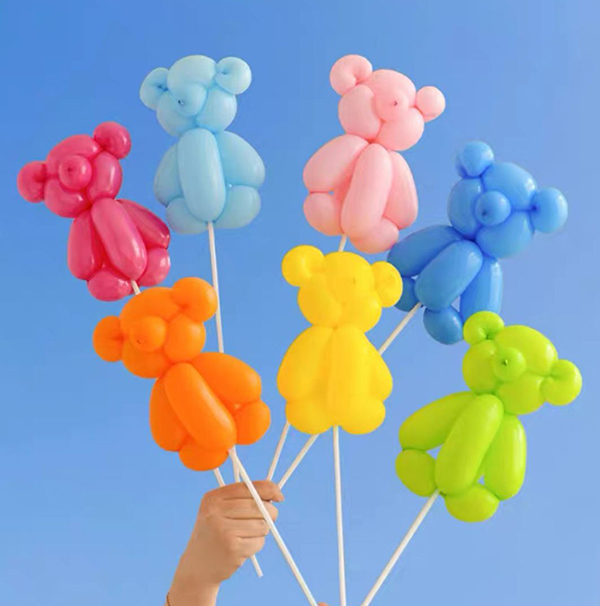
Modeling Latex Balloons
Xiongxian Borun Latex Products Co., Ltd. specializes in the production of latex balloons, offering a wide variety of shapes and sizes. Niun®'s modeling latex balloons are one such product. These magic balloons come in four main color schemes, with a total of over 40 colors available. They can be ordered in single or mixed color packaging. The fun and versatile modeling latex balloons add countless possibilities to balloon party decorations, meeting the diverse needs of our customers.
Read MoreSend Inquiry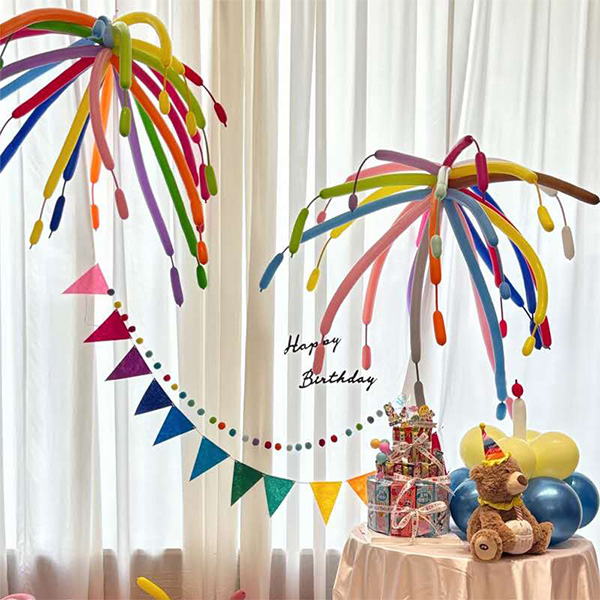
Fireworks Modeling Balloons
Borun Balloon Factory is a top manufacturer in the balloon industry. Its brand NiuN® proudly launches its flagship product — Fireworks Modeling Balloons. These balloons have bright colors. They’re made of durable latex, with great craftsmanship. Their lively design takes inspiration from brilliant fireworks. They give party aesthetics a new meaning. Use them with fireworks party decoration balloons, fireworks balloon garland arches or fireworks baloon centerpiece column. They can create an joyful atmosphere for birthday celebrations, holiday events and corporate gatherings. Choose Borun for your purchase. You’ll get great quality guarantee, bulk purchase discounts and customized solutions. This makes Niun® fireworks modeling balloons the top choice for event planners and companies around the world.
Read MoreSend Inquiry
Changeable Long Magic Balloon
NiuN changeable long magic balloons by China Borun balloon factory manufacturer and supplier. 160Q/260Q/350Q sizes, matte macaron metallic colors, durable twistable, kids creative play, in stock, free samples, bulk wholesale pricing.
Read MoreSend Inquiry
NiuN® is a famous customized Long magic balloon manufacturers and suppliers in China.You are welcomed to come to our factory to buy cheap newest and high quality Long magic balloon.If I place an order now, do you have it in stock? of course! If I want to wholesale, what price will you give me? If your wholesale quantity is large, we can provide the factory price quotation.