- English
- Español
- Português
- русский
- Français
- 日本語
- Deutsch
- tiếng Việt
- Italiano
- Nederlands
- ภาษาไทย
- Polski
- 한국어
- Svenska
- magyar
- Malay
- বাংলা ভাষার
- Dansk
- Suomi
- हिन्दी
- Pilipino
- Türkçe
- Gaeilge
- العربية
- Indonesia
- Norsk
- تمل
- český
- ελληνικά
- український
- Javanese
- فارسی
- தமிழ்
- తెలుగు
- नेपाली
- Burmese
- български
- ລາວ
- Latine
- Қазақша
- Euskal
- Azərbaycan
- Slovenský jazyk
- Македонски
- Lietuvos
- Eesti Keel
- Română
- Slovenski
- मराठी
- Srpski језик
Analysis of Party Balloon Market Size and Growth
The party balloon market continues to grow rapidly, valued at $740 million in 2024 and projected to reach $770 million in 2025, and $1.07 billion by 2033, representing a compound annual growth rate of 4.2%.
In recent years, the party balloon industry has shifted from basic decoration products to customized and experience-driven solutions. Buyers are no longer only looking for low prices — they are paying more attention to product consistency, color matching, packaging design, and supply stability.
For wholesalers and brand owners, working with a reliable balloon manufacturer is becoming more important than ever, especially when dealing with peak seasons such as Christmas, Halloween, and wedding seasons.
At the same time, demand for balloon arch kits and custom printed balloons continues to grow, driven by social media trends and event personalization.
Party balloon market size
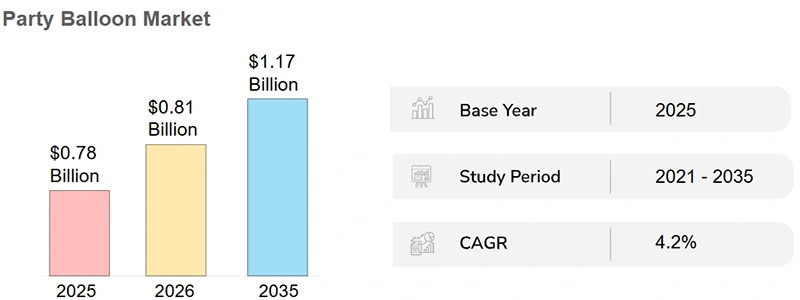
The global party balloon market reached $780 million in 2025, increased to $810 million in 2026, expanded to $840 million in 2027, and is projected to reach $1.17 billion by 2035, representing a CAGR of 4.2% from 2026 to 2035.

The burgeoning party balloon celebration culture and themed decorations are driving demand. Latex balloons dominate, accounting for 65% of the market share, while foil balloons and custom balloons continue to grow rapidly through online retail channels.
The US party balloon market is steadily growing due to increasing use for birthdays, corporate events, and public celebrations.
Latex balloons dominate sales for environmental reasons, with over 60% preference, while foil balloons cater to high-end decoration needs, contributing nearly 30%. Over 40% of purchases come from specialty stores and party supply retailers, while online platforms currently account for 25% of sales.
Custom and character-themed designs drive over 35% of demand, and nearly 50% of consumers consider balloon decorations essential for both family celebrations and professional event setups.
The party balloon market is rapidly evolving, driven by growing demand for innovation, sustainability, and customization. Currently, over 30% of buyers want balloons that align with broader event themes and values, such as environmental friendliness and personalization.
Retailers and manufacturers are adapting to expanded color palettes, LED integration, and biodegradable latex products. Urban markets contribute over 60% of global sales, reflecting a shift towards more sophisticated personal and corporate events.
Online ordering currently accounts for 25% of total transactions, while emerging technologies such as real-time customization and augmented reality previews enhance the consumer experience and drive brand differentiation in the competitive landscape.
Party Balloon Market Trends
The global party balloon market is experiencing strong growth, driven by evolving consumer preferences and increased spending on celebrations, events, and decorations.
Latex balloons continue to dominate in terms of volume, holding over 65% of the total market share due to their biodegradability and affordability. Foil balloons are gaining popularity due to their attractive appearance and longer float time, accounting for nearly 25% of the market.
Customized printed balloons are increasingly popular, with approximately 35% of event organizers prioritizing personalized themes for corporate and private events. Retail distribution channels account for approximately 50% of total sales, driven by the widespread use of party balloons in supermarkets, hypermarkets, and specialty stores.
However, online channels are rapidly emerging, accounting for nearly 30% of the market share, driven by the rise of e-commerce platforms and direct-to-consumer sales. Demand for children's birthday parties accounts for over 40% of global consumption, followed by weddings, anniversaries, and holidays, which together account for 35%.
Nitrogen balloons are seeing expanding use in floating decorations due to their appeal, accounting for over 45% of total usage. Color trends such as soft hues, metallic tones, and character-themed designs are influencing purchasing behavior, with over 60% of buyers choosing aesthetics consistent with the event theme.
The increasing popularity of party planning services is further stimulating demand for balloons in urban markets.
Detailed Analysi
The party balloon market is primarily segmented by type and application, reflecting diverse consumer uses and preferences. In terms of type latex balloons and foil balloons dominate globally. Latex balloons are widely favored for their flexibility, affordability, and environmental friendliness.
Foil balloons, on the other hand, offer durability and visual appeal, particularly for themed decorations. Regarding applications, commercial and residential use cases exhibit different purchasing behaviors. The commercial segment includes event organizers, decorators, and retailers, while residential users include individuals hosting personal celebrations.
The segmentation shows that the commercial sector accounts for a higher proportion of overall demand, driven by large events and corporate functions, while residential use thrives due to repetitive, small-volume purchases.
By Type
Latex Party Balloons: Due to their affordability and biodegradability, latex balloons account for approximately 65% of the total market. They are most popular for children's parties and leisure activities, with over 50% of consumers choosing latex variants for personal parties. Their wide range of colors and easy customization options further support their dominance.
Foil Party Balloons: Foil balloons account for nearly 25% of global sales, particularly suitable for high-end events, corporate parties, and branded themes. Their extended float time and metallic surface appeal to approximately 40% of urban consumers seeking visual appeal and information printing capabilities for upscale events.
By Use
Commercial: Driven by bulk purchases for weddings, corporate events, store openings, and festivals, the commercial sector accounts for nearly 60% of total market consumption. Approximately 35% of commercial buyers prefer customized balloons to align with brand or specific event themes. Demand in this segment is also influenced by seasonal sales peaks.
Residential: Residential use accounts for approximately 40% of the market, primarily driven by birthday parties, family gatherings, and small celebrations. About 45% of residential consumers purchase balloons through retail and online platforms. Convenience, cost-effectiveness, and ease of use are the main purchasing drivers for individual users in this segment.
Regional Outlook
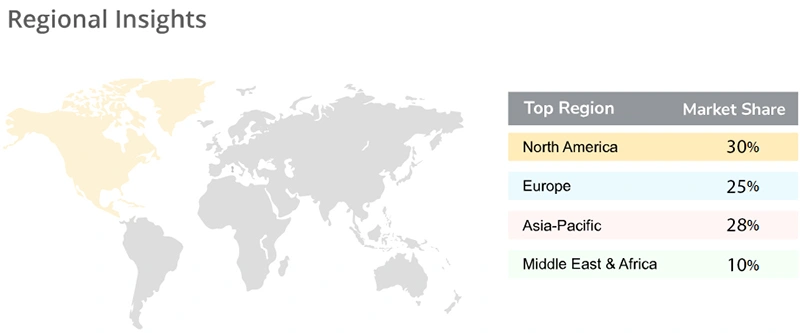
Driven by cultural customs, disposable income levels, and evolving celebration trends, the global party balloon market is experiencing distinct growth patterns across different regions. North America leads the market in terms of demand, with balloons widely used in both personal and commercial events.
Europe follows closely behind, influenced by the adoption of sustainable balloons and the popularity of themed events.
The Asia-Pacific region is experiencing rapid growth, supported by population growth, urbanization, and increased spending on celebrations. Meanwhile, balloon usage in the Middle East and Africa is steadily increasing, particularly during religious and community festivals. The rise of e-commerce has also contributed to regional growth, making decorative products more accessible. Furthermore, demand for customized and themed balloons is expanding in all markets, with urban areas making a significant contribution to sales growth.
North America
North America accounts for over 30% of global party balloon demand, driven by high spending on birthdays, corporate events, and holiday celebrations.
Latex balloons dominate the market in this region, accounting for over 60% of sales, due to environmentally conscious consumer behavior. Over 40% of event organizers in the region prefer nitrogen balloons for both indoor and outdoor use. The US accounts for the majority of the market share in the region, with approximately 70% of sales coming from the retail and party supply chain.
Online purchasing is increasingly popular, accounting for over 25% of balloon sales. Customized balloons and character-themed designs are particularly popular, representing nearly 35% of consumer preferences in the region.
Europe
Europe accounts for approximately 25% of global party balloon consumption due to growing demand for sustainable and biodegradable balloon types.
Approximately 55% of European consumers prefer latex over foil due to environmental regulations and awareness. Foil balloons maintain a strong position in the high-end market, particularly in France, Germany, and the UK. Corporate events, product launches, and promotional activities account for over 40% of balloon usage. Nearly 30% of purchases are made through online platforms, and themed designs are gaining increasing appeal during seasonal celebrations.
Recyclable packaging and EU-compliant manufacturing practices are driving manufacturers' preferences in the region.
Asia Pacific
The Asia Pacific party balloon market is growing the fastest, accounting for nearly 28% of the global share.
This surge is driven by high demand from countries such as China, India, and Japan. Residential applications dominate the region, accounting for over 60% of the total. Festivals, cultural ceremonies, and school events are the main drivers of balloon purchases. Over 50% of consumers choose multi-pack balloons based on value. Urbanization and the influence of Western-style birthday parties have led to increased spending on decorations.
Retail stores lead the distribution channel with a 65% share, while e-commerce accounts for 20% and is still growing.
Middle East and Africa
The Middle East and Africa account for approximately 10% of the global party balloon market.
The main driver of growth is the increasing popularity of planned celebrations, weddings, and religious festivals. In countries like the UAE and Saudi Arabia, nitrogen and metallic balloons are particularly popular, accounting for over 40% of regional sales. Custom-printed foil balloons are becoming increasingly popular, especially in the commercial sector. Approximately 60% of balloon sales in the region are conducted through retail stores, with another 25% through party planning and decoration services.
Regional climate factors also influence balloon material preferences, with heat-resistant foil types favored for outdoor events.
Conclusion
This comprehensive report on the party balloon market provides a detailed assessment of key growth patterns, regional insights, emerging trends, competitive landscape, and strategic opportunities.
The analysis covers major balloon types, including latex and foil, which together account for over 90% of the global product volume. It assesses usage by application, showing that commercial demand accounts for approximately 60% of the market share, while residential applications account for 40%. Regionally, North America leads the market with a share of over 30%, followed by Europe and the rapidly growing Asia-Pacific region.
The report also introduces over 20 key players, representing over 75% of the total market influence. It broadly covers key dynamics such as the rise of eco-friendly balloon alternatives, increasing consumer preference for themed decorations, and the growth of e-commerce channels (accounting for 25%-35% of sales). This report is supported by visual data, segmentation tables, and the latest developments by manufacturers highlighting innovation, strategic investments, and supply chain transformations that are shaping the future of the party balloon industry.
FAQ
What is the current size of the global party balloon market?
The global party balloon market is worth hundreds of millions of dollars and is expected to continue its steady growth in the coming years. The industry shows stable demand, driven by global events, celebrations, and retail spending.
What factors are driving the growth of the balloon market?
Key drivers include increased demand for party decorations, the popularity of social media-driven event setups, and the rise of customized balloon products for weddings, birthdays, and corporate events.
Which type of balloon dominates the market?
Latex balloons and foil balloons are the two main categories. Latex balloons are widely used for large decorations, while foil balloons are preferred for themed and high-end event designs.
Which regions have the greatest demand for balloons?
North America and Europe represent mature markets with stable demand, while the Asia-Pacific region is experiencing faster growth due to increased consumption and the expansion of the event industry.
Is the balloon market suitable for wholesale and bulk buyers?
Yes, the balloon industry is very suitable for wholesale buyers. With stable demand and seasonal peaks, bulk purchasing is common among distributors, retailers, and event suppliers.