Manufacturing Quality / Lot Inspection / Wholesale Acceptance
Quality control in latex balloon manufacturing should connect each production lot with an approved balloon specification, defined inspection conditions and a documented acceptance decision. A finished balloon cannot be evaluated properly by weight, appearance or a safety certificate alone.
Importers sourcing wholesale latex balloons from a manufacturer should identify the exact size, gram-weight grade, color, finish, quantity and packing requirement before production checks begin. These fields define what the factory is expected to deliver.
Consider a buyer ordering wholesale matte latex balloons for retail distribution. A 12-inch, 2.8 g pink matte balloon needs its own approved appearance and physical specification. A 12-inch, 3.2 g version must not be silently substituted, even if both balloons have the same nominal diameter.
Borun Balloon Factory, operated by Xiongxian Borun Latex Products Co., Ltd., has manufactured balloons in Hebei, China, since 2006. Borun's latex manufacturing information identifies production inspection, color review, size and gram-weight checks, packing inspection and pre-shipment verification as relevant controls. The actual inspection findings require records for the specific order.
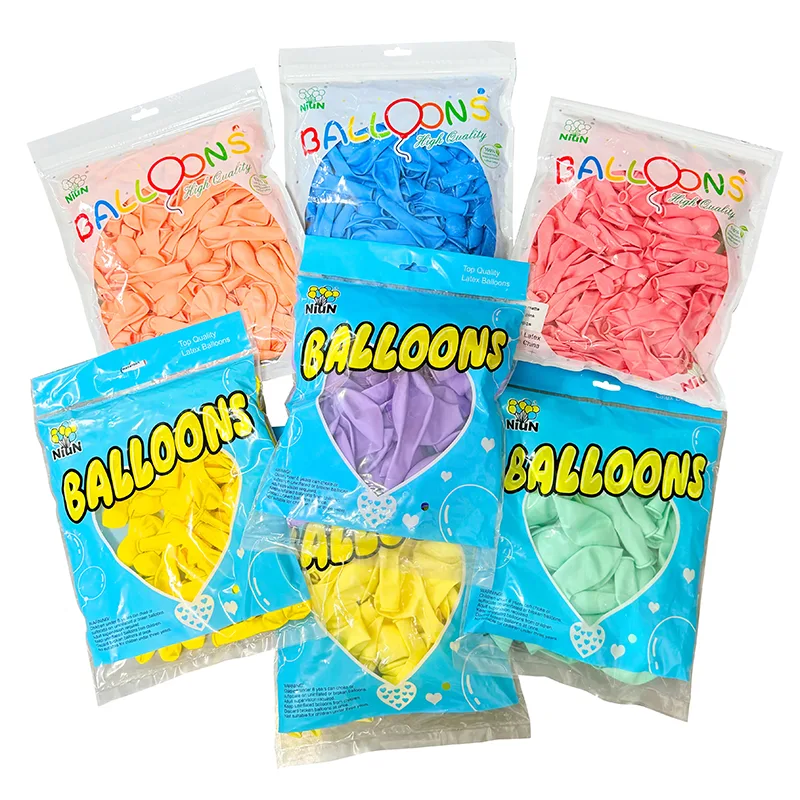
Start with an Approved Latex Balloon Lot Record
A bulk latex balloon purchase should establish a product reference before manufacturing and final inspection. The reference needs enough detail to distinguish one balloon configuration from another, including different gram-weight grades of the same size.
The following record illustrates how a buyer can define an inspection assignment. It is a documentation example, not a completed Borun inspection report.
For a repeat wholesale latex balloon order, the previous approved specification and an applicable approved sample can provide a reference. If the supplier changes the balloon weight grade, finish, color or packing, that change should be identified and approved rather than treated as an identical repeat order.
Match Gram-Weight Checks to the Exact Balloon Size
Borun's standard latex balloon range includes several size-specific gram-weight options. During inspection, the actual individual balloons must be compared with the approved size and weight grade. The nominal weight is not a substitute for the agreed tolerance or sampling rule.
| Nominal balloon size | Confirmed gram-weight grade | Inspection reference | Procurement implication |
|---|---|---|---|
| 5 inches | 1.1 g | Approved 5-inch balloon specification | Do not compare with larger sizes |
| 10 inches | 1.5 / 1.8 / 2.2 g | Exact selected 10-inch grade | Different grades require separate identification |
| 12 inches | 2.8 / 3.2 g | Exact selected 12-inch grade | Prevent grade substitution or mixing |
| 18 inches | 9.5 g | Approved 18-inch specification | Confirm the corresponding product |
| 36 inches | 35 g | Approved 36-inch specification | Review large-size product and packing |
When individual balloon weights are measured, the record should identify the balance, selected samples, measuring conditions and actual results. The buyer and factory must agree on how those results are judged. A nominal 2.8 g designation does not by itself establish an automatic ±0.2 g tolerance.
Gram weight confirms specification conformity, not overall quality. A balloon that matches its approved weight can still have a pinhole, damaged neck, uneven inflated shape or incorrect retail packaging.
Document the Manufacturing Quality-Control Checkpoints
Latex balloon inspection is more useful when observations are connected to the point in manufacturing where the relevant characteristic can first be checked. The checks below describe practical inspection assignments and product references; they do not represent a previously completed Borun lot report.
Confirm Material and Color References
Review the approved pure natural latex balloon material requirement, intended finish and color reference. Identify which raw-material and color records correspond to the production assignment. Do not assume a fixed material purity percentage without a relevant test record.
Approved material and color references; hold the relevant input or production assignment if required information is missing or inconsistent.
Examine the Formed Latex Balloon Body
Check actual balloon samples for visible surface marks, malformed necks, unexpected shape differences and other defects defined by the approved product standard. Identify which forming lot or production interval the affected balloons came from.
Recorded product and lot, visible observations and sample photos where available; isolate an affected group for further review when required.
Measure the Approved Size and Weight Grade
Select balloons according to the agreed sampling plan and identify the selected size-specific gram-weight grade. Record actual measurements, the approved tolerance and whether each tested balloon meets the specification. Balloon size and weight should never be assessed without the product reference.
Identified samples, measurements, reference limits and recorded outcomes; review grade mixing or out-of-limit results before packing.
Evaluate Inflation, Leakage and Visible Defects
Inflate selected latex balloons under the agreed method and target condition. Observe inflated shape, visible surface defects, neck condition and leakage signs over the defined observation period. Record the method and duration; do not assume every balloon is subjected to a fixed 24-hour hold test.
Balloon identity, inflation conditions, observation time, leak or failure location, applicable acceptance rule and inspection outcome.
Compare Color and Finish with the Approved Sample
Examine the actual matte, pearl, metallic, macaron or retro latex balloon against its approved reference. Where a measured color-difference criterion applies, confirm the measurement method, reference, conditions and acceptance limit before evaluating the results. A color-control target is not a completed batch test.
Color or physical sample reference, lighting or measurement conditions, recorded result and approval or hold decision.
Reconcile Balloon Pieces and Approved Packaging
Check that each wholesale or retail package contains the agreed balloon size, weight grade, color and piece quantity. Review bag condition, labels and carton contents against the approved commercial packing specification. If packaging is customized, Borun coordinates that service through its affiliated packaging manufacturing partner.
Approved packing specification, pack counts, identified cartons and discrepancies to resolve before finished-goods release.
Use a Defined Sampling Plan, Not an Invented Sample Count
Sampling should reflect the defined inspection lot, the relevant product variation, the inspection characteristic and the buyer's approved acceptance requirements. A sample from one 12-inch matte color cannot automatically represent a different 18-inch latex balloon configuration.
ISO 2859-1:2026 describes acceptance sampling schemes indexed by acceptance quality limit for lot-by-lot inspection by attributes. The standard may be considered when an appropriate sampling plan is being agreed. It does not mean that Borun uses a particular sample quantity, inspection level or acceptance quality limit on every order.
Attribute Inspection
Classify each inspected balloon according to defined conditions, such as a visible hole, unacceptable deformation, packing error or leakage under an agreed test. Apply the specified acceptance and rejection numbers to the correct lot.
Measurement Inspection
Record numerical results when measuring individual balloon gram weight, inflated dimensions or an agreed color difference. Evaluate those results against the documented product limits and chosen measurement method.
The acceptance quality limit is part of a statistical sampling scheme, not a guarantee that every delivered lot contains a particular percentage of defective balloons. A buyer must specify the applicable plan, defect classifications, lot size, sample size and acceptance or rejection criteria before interpreting inspection results.
Confirm Latex Balloon Inspection Requirements Before Production
Share the actual latex balloon size, weight grade, finish, color, expected order quantity, packing format and destination. Ask Borun to review the physical sample and the inspection references that need buyer approval.
What Should Happen When a Latex Balloon Inspection Finds a Defect?
A useful inspection record does more than identify a defective sample. It establishes which actual product and lot may be affected, the evidence for the nonconformance and the decision required before packing or shipment.
A selected 12-inch, 2.8 g matte latex balloon shows an apparent slow leak during the agreed inflated observation. This is hypothetical, not a reported Borun production defect.
Record the product specification, actual lot, sample identification, inflation conditions, elapsed observation time, leak location and sample count.
Identify the production quantity potentially affected. Prevent premature release of that defined quantity while the issue is evaluated. Do not automatically reject unrelated lots.
Examine plausible forming or product damage causes, handling after production and the validity of the inspection setup. Do not declare a root cause without evidence.
Record the proposed action, responsible reviewer and agreed reinspection. A corrected lot should be assessed against the original approved criteria or a formally approved revision.
Record the final affected quantity, inspection findings, buyer disposition where required, authorization and resulting carton or shipment status.
A visual mark on an uninflated latex balloon, a leak after inflation and a shortage inside a retail bag are different findings. They should not all be assigned the same cause or corrective action.
Compare Actual Findings with the Correct Acceptance Reference
| Observed issue | Exact reference | What to record | Decision path |
|---|---|---|---|
| 12-inch 2.8 g balloon outside the approved weight requirement | Signed 12-inch 2.8 g specification and tolerance | Sample IDs, individual weights, lot and instrument | Apply agreed acceptance rule; review affected lot |
| Inflated balloon shows a leak | Approved inflation and leakage inspection method | Inflation condition, time, leak location and observations | Classify defect; contain and investigate if required |
| Matte balloon color differs from reference | Approved physical sample and any applicable measured limit | Sample reference, light or measuring conditions and result | Recheck against approved conditions; hold if not conforming |
| Retail bag has incorrect quantity or color mix | Approved pieces per pack and color assortment | Bag and carton IDs, actual contents and affected count | Correct or rework packing, then recount and review |
The correct disposition depends on the signed inspection and purchasing requirements. One failed sample does not automatically prove that an entire production lot must be rejected; equally, a favorable sample result is not a substitute for applying the required acceptance rules.
Release the Finished Latex Balloon Lot Against Evidence
Before finished cartons are released for dispatch, the buyer and supplier should be able to connect the goods with the relevant approved specification, production identity, recorded checks, accepted corrective actions and finished packing list.
Accept
Required records meet the agreed acceptance rules; product, packing and shipment quantities are reconciled.
Hold
Findings, sample references or inspection records are incomplete, disputed or awaiting reinspection.
Reject or Rework
The lot fails the agreed criteria and requires an authorized correction, replacement or commercial decision.
Record the order and lot identifiers, inspected latex balloon size and weight grade, approved reference version, applicable sample plan, inspection results, open or closed deviations, finished pack count, carton references, disposition and authorizing reviewer.
A lot should not be described as accepted merely because it has been manufactured, packed or assigned a shipping date.
Product safety and regulatory documentation is reviewed separately. Relevant Borun latex balloon documents can include applicable CE documentation, EN 71 test reports, a Children's Product Certificate and an EU Declaration of Conformity, subject to product and market scope. Such documents do not replace inspection of actual size, weight grade, inflated condition, color or packing.
An approved latex balloon specification can also serve as a reference for a later wholesale order. Repeat production should be compared with the applicable approved version rather than assumed to be identical to an earlier lot.
Request Wholesale Latex Balloons with Defined Acceptance Criteria
Send Borun your balloon size, required gram-weight grade, finish, colors, purchase quantity, packing specification and destination market. State whether your procurement team requires an approved sample, a particular inspection plan or order-specific quality documentation before shipment.
Buyer Questions About Latex Balloon Manufacturing Quality Control
Is a standard balloon gram weight enough to approve a lot?
No. Compare sampled balloons with the exact approved size and weight grade, then assess required inflation, appearance, packing and other criteria separately.
How many latex balloons should be sampled from each lot?
There is no universal count in this guide. The sample count must come from the agreed plan, defined lot size and inspection requirements. Borun's actual sample results require corresponding order records.
How should an apparent pinhole or slow leak be checked?
Identify the exact latex balloon sample. Apply the agreed inflation and leakage observation method, record the conditions and location of the leak, and classify the outcome under the approved acceptance rules.
Does a 3.2 g latex balloon automatically pass more tests than a 2.8 g balloon?
No. The two 12-inch gram-weight grades are different specifications. Actual inflation, leakage, appearance and other performance outcomes need their own evidence.
Can a safety test report replace final lot inspection?
No. Safety documentation addresses its stated compliance scope. Lot inspection addresses the actual delivered balloon specification and packing requirements.
What happens after the factory corrects a nonconforming lot?
The affected product should be checked again against the relevant approved requirements. Record the correction, reinspection outcome, final affected quantity and authorized disposition before release.
What should a buyer retain for the next wholesale order?
Retain the approved product specification, applicable sample or color reference, packing version, inspection decisions and approved changes. Do not assume a standard retention period without a documented agreement.
Evidence statement: the inspection fields, examples and decision methods in this article are guidance for product-specific wholesale quality review. They are not representations of an actual Borun production lot's sample count, defect rate, measurements, equipment readings, completed corrective action or signed release report. Actual results must be supported by the applicable factory and purchasing records.