Mixed Balloon Orders / Factory Coordination / Purchase Control
A large balloon purchase order becomes complex when it includes different balloon categories, sizes, artwork versions, complete kits or packaging requirements that cannot all follow the same production route. Buyers sourcing custom printed latex balloons for bulk wholesale orders must approve the balloon specification and each printed design before the corresponding printing work can proceed.
The same order may also include wholesale foil balloon styles for distribution, stock latex balloons, transparent TPU Bobo balloons and complete balloon arch kits. Each group has different purchase units, minimum quantities, manufacturing requirements and inspection needs. A single purchase-order number does not make those products one production batch.
Borun Balloon Factory, operated by Xiongxian Borun Latex Products Co., Ltd. in Hebei, China, has manufactured balloons since 2006. For complex wholesale projects, the useful question is not simply how many balloons a factory can make in one day. It is how the buyer and manufacturing team identify each product line, confirm dependencies, manage changes and decide what is ready to pack and ship.
1. Break the Master Purchase Order into Product-Specific Lines
The first control point is a master order register. An importer should be able to identify one approved purchasing line for every balloon configuration that requires a separate manufacturing, sampling or packing decision. A line needs the actual product, quantity, unit of sale, required artwork or sample version, destination and requested completion date.
A complex order should not be described merely as "200,000 balloons plus party kits." Without the exact size-color-design breakdown, the factory cannot determine whether the quantities satisfy the relevant product minimums or which manufacturing resources each line will need.
Illustrative project only: The following purchase-order lines demonstrate how a hypothetical importer might combine multiple balloon categories. They are not a Borun customer order, production record or confirmed availability quotation.
| Line | Balloon product | Illustrative quantity | Separate approval | Critical sourcing check |
|---|---|---|---|---|
| A | Plain 12-inch latex balloons | 80,000 individual pieces | Color, finish, weight grade, size and packing split | Confirm the actual quantity per approved variant |
| B | Custom printed 12-inch latex balloons | 40,000 pieces: two designs at 20,000 each | Separate artwork and inflated sample per design | Each design meets the 5,000-piece standard minimum |
| C | Existing stock foil balloons | 600 pieces: six defined variants at 100 each | Exact style, size, color and approved pack | 100 pieces per stock style-size-color variant |
| D | Stock transparent TPU Bobo balloons | 200 individual pieces: two confirmed variants | Size, construction, closure and packing | Confirm 100-piece stock minimum and variant availability |
| E | Complete balloon arch kits | 60 complete sets: two designs at 30 sets each | Bill of materials, kit assembly and retail pack | 30 complete sets; special components checked separately |
The example is large because of both volume and coordination complexity. The 40,000 printed latex balloons require artwork-specific approval; the stock foil balloons require variant-level confirmation; the arch kits must contain every approved component. Adding 80,000 pieces, 600 pieces and 60 sets into one headline unit count would conceal these differences.
Borun's standard wholesale latex balloon minimum is 5,000 pieces, with the actual size-color and packaging allocation confirmed for the quotation. Custom printed latex balloons normally start at 5,000 pieces per design. Stock foil balloons require 100 pieces per style, size and color, normally packed as two 50-piece bags. Standard stock TPU Bobo balloons start at 100 pieces, while balloon arch kits start at 30 complete sets. New printed or specially developed components can have separate minimums.
2. Assign Each Balloon Category to Its Actual Production Route
Borun's factory information describes 15 dedicated production lines: five for latex balloon forming, three for custom printed latex balloons, three for foil balloon manufacturing and customization, two for TPU Bobo balloons, and two for custom printed foil and Bobo work. These are distinct manufacturing resources, not fifteen interchangeable machines.
The manufacturing team must check the relevant resource and its existing workload before discussing a completion date. The overall factory line count does not establish an available production slot for a particular design.
Approved Base Balloon Manufacturing
Confirm the actual latex balloon sizes, pure natural latex material, finishes, colors and approved gram-weight options. If the order contains 12-inch 2.8 g and 12-inch 3.2 g balloons, record the two specifications separately. Do not use gram weight as a proxy for overall balloon quality.
Base Balloon and Print Approval Must Agree
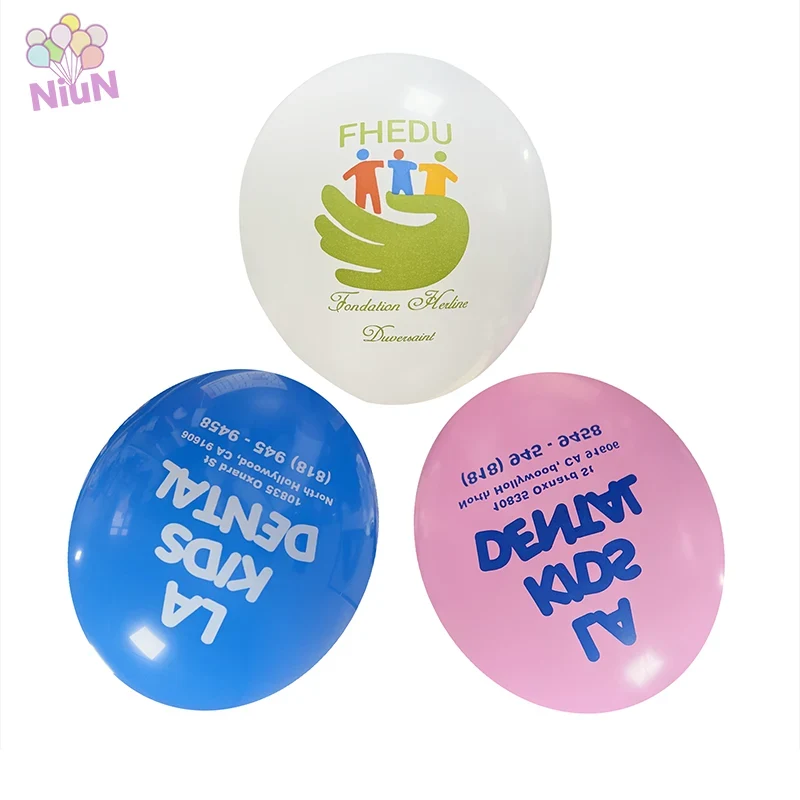
The buyer first confirms the latex balloon size, finish and base color. Then each artwork design requires its own approved print colors, feasible placement, proof and physical sample where applicable. Borun's confirmed latex printing capability is up to five colors, with print positions reviewed for the actual artwork and size. Latex screen printing is carried out while balloons are partially inflated.
Stock Variant or New Development?
Existing foil balloon styles are checked by shape, size, color, valve and availability. Newly printed foil designs and custom shapes require separate design-level feasibility, minimums and sample approvals. The factory should not treat a new custom foil shape as a stocked existing variant.
Transparent Balloon and Configuration Control
Identify the exact TPU Bobo size, closure, surface and any printed design. Stock balloons, custom printed Bobo balloons and complete decorated sets can have different purchase units and minimums. Do not automatically use the 100-piece stock threshold for a custom printed design.
Component Availability Before Complete Kit Packing
A wholesale balloon arch kit cannot be considered finished until the exact approved balloon counts, sizes, colors, accessories, instructions and packing components are present. Assembly and packing depend on the approved kit bill of materials, not merely on the quantity of loose balloons manufactured.
3. Map the Approval Dependencies Before Promising a Schedule
The practical schedule for a large mixed order starts with the decisions that must occur first. Printed latex balloons may depend on base balloon availability and artwork approval. Complete arch kits depend on approved balloon and accessory quantities. Retail packing may depend on approved labels, barcodes and instructions.
These stages do not imply that every workstream must begin or finish on the same date. Where two product lines are independent, they may be reviewed for parallel scheduling. Where a task depends on approved components or artwork, the schedule must reflect that dependency. Parallel production is an option to evaluate, not an automatic guarantee.
Borun's normal sample preparation for applicable standard custom programs is approximately 3–5 working days. Standard bulk production commonly requires 5–15 working days after all relevant specifications and required approvals are confirmed. Custom foil development, new shapes, additional samples, packaging approvals and larger mixed-order volumes may require a different project-specific schedule. International freight and customs timing are separate from factory production.
Need to Review a Mixed Balloon Order Before Production?
Send Borun the product categories, individual sizes and variants, artwork files, quantities per design, sample requirements, packaging formats and desired receiving date. Request a review of product-specific minimums and approval dependencies before confirming the order.
4. Control Changes Without Losing the Approved Order Version
A mixed order needs a written record whenever a material specification changes. A buyer may revise a logo, substitute a foil balloon style, change the Bobo balloon size, or add another retail label. Each change can affect a different part of the order.
A change should not be treated as automatically free or instantly feasible. The supplier and buyer should identify which lines are affected, whether existing materials or work can still be used, whether new samples are needed, and whether the cost or delivery plan must be revised.
Printed Latex Balloon Artwork Is Revised
Identify the exact custom printed latex balloon design and approved version. Check whether new print colors, placement, proofing or samples are needed. Hold the affected print run until the new artwork is approved; do not automatically pause unrelated stock foil balloon lines.
A Stock Foil Balloon Variant Is Unavailable
Identify the missing style-size-color variant. Present a substitute only with the buyer's written approval. Check whether the replacement has a different size, valve, packaging requirement or destination-market documentation.
Balloon Arch Kit Contents Change
Revise the component list for the affected complete kit: actual latex balloon counts by size and color, accessories, instructions and retail pack. Recheck representative assembly and packing before approving the updated kit version.
A Retail Label or Packaging Design Changes
Review the new artwork, language, warnings, barcode, packing unit and destination requirements. Borun coordinates customized wholesale balloon packaging through its long-term affiliated packaging factory. Packaging changes require separate approval and schedule review; they are not evidence of a new balloon manufacturing process.
Change-control record: Record the request date, affected order lines, prior and proposed versions, reason for change, cost or schedule impact, required re-approval, decision owner and final written authorization. Changes that affect the signed specification should not silently replace the original purchase order.
5. Review Product-Specific Evidence Before Packing
Complex orders do not become acceptable merely because the total piece count is correct. Each balloon product has its own construction and approved specification. The buyer should ask for inspection evidence that identifies the actual item, size or configuration, reference sample, inspection method and resulting decision.
| Actual product | Approved reference | Representative check | Action if not conforming |
|---|---|---|---|
| 12-inch latex balloons in an agreed weight grade | Exact size, approved 2.8 g or 3.2 g specification, finish and color | Size-specific weight consistency, inflated appearance, pinholes and leakage against the agreed method | Identify affected lot; correct, retest or hold that product line |
| Custom printed latex balloons with a specific logo | Approved base balloon, artwork version, print color and placement | Inspect the actual inflated printed sample for legibility, alignment and agreed visual characteristics | Hold the affected design, correct print setup and reapprove as required |
| Specified stock foil balloon variant | Style, dimensions, color, valve and accepted physical sample | Check shape, seam, inflation behavior, valve function and packing | Segregate the affected variant and resolve before carton release |
| Specified transparent TPU Bobo balloon | Approved size, transparency, closure and supply configuration | Inspect visible marks, actual closure and agreed inflation condition | Hold affected variant; request correction or new sample when necessary |
| Complete balloon arch kit of the approved version | Component list, size-color counts, accessories and instructions | Count components, evaluate representative balloons, test assembly and inspect pack | Correct missing parts, repeat assembly check and approve revised kit |
A latex balloon's gram weight is only one characteristic of the approved size-specific specification. It should not replace actual checks for leakage, visible damage, inflated appearance or completed kit contents. Likewise, a foil balloon valve test is not a valid substitute for inspecting the closure of a TPU Bobo balloon.
6. Reconcile Packaging, Cartons and Order-Line Quantities
Packing is another point at which a multi-product order can become difficult to reconcile. A stock foil balloon variant may be packed in bags of 50, while plain latex balloons can use a different inner pack and complete arch kits are counted by sets. Carton totals must be connected to the correct commercial unit.
| Order field | Required evidence | Release question |
|---|---|---|
| Order line and variant | Approved product identifier, size, color and artwork revision | Does the carton contain the intended product line? |
| Commercial quantity | Individual pieces or complete sets, with exact total per variant | Does the packed quantity match the purchase order? |
| Inner packing | Approved bags, labels, inserts and pieces or sets per pack | Does the saleable unit match the signed pack? |
| Carton grouping | Numbered cartons, contents by product line and quantity per carton | Can warehouse receiving verify the delivered units? |
| Shipment documents | Packing list, commercial invoice, agreed marks and relevant market documents | Do the documents reflect the goods actually released? |
A useful carton record should allow the importing warehouse to identify a missing or incorrect carton without recounting every different balloon product in the shipment. Carton marks and packing lists should correspond to the approved order line and packing version.
The importer should separately confirm destination-specific safety and labeling requirements. A test report for a plain latex balloon does not automatically cover a printed foil balloon, an electronic LED Bobo set or a complete mixed-component kit.
7. Decide Whether to Consolidate or Split the Shipment
Consolidating different balloon categories may reduce duplicate handling and help the buyer receive one planned group of goods. However, consolidation is only suitable when the products, approved packing, shipping arrangement and receiving deadline are compatible.
One delayed artwork approval should not automatically trigger a promise that all unrelated products will ship together on the original date. The factory and buyer should review the actual tradeoff between waiting for a complete shipment and approving a partial shipment of products that are already ready.
Consolidate
All required product lines have passed their own approval and packing checks; the agreed delivery schedule allows a combined shipment, and the buyer approves consolidated dispatch.
Review a Partial Shipment
Independent product lines are ready but another line remains delayed. Review extra freight, customs documents, receiving capacity and buyer authorization before splitting the order.
Hold Shipment
The proposed shipment has unresolved quantity differences, incorrect packing, missing approvals or applicable documentation gaps. Correct the affected items before authorizing release.
Borun can discuss consolidated shipping with the buyer, subject to the actual order and transport arrangements. EXW, CIF, DAP or DDP terms should be specified in the quotation and sales contract as applicable. The standard payment arrangement is a 30% deposit, with the balance paid before shipment.
Production timing and international delivery timing are different. The buyer should confirm factory completion, freight booking, export documents, customs requirements and destination receiving as separate milestones.
Request a Quotation for a Large Mixed Balloon Order
Provide each latex, printed latex, foil, TPU Bobo or arch-kit line separately. Include quantities per variant or artwork, required samples, retail packaging, destination, target delivery date and whether combined shipment is required or optional. Borun can review the actual supply configuration before preparing an order-specific plan.
Frequently Asked Questions About Complex Balloon Orders
Can different balloon categories share one wholesale purchase order?
Yes, a buyer may organize latex, printed latex, foil, TPU Bobo and complete balloon arch kits under one purchasing project. Each commercial configuration should still have its own quantity, minimum, approval and packing record.
Does a large order have to be manufactured in one continuous batch?
No. Different balloon materials, artwork designs and manufacturing routes may require separate runs or batches. The practical requirement is traceability between the approved product specification, relevant production records and finished goods, not an unsupported promise of one continuous batch.
Can several custom printed latex designs share one 5,000-piece minimum?
Borun's standard printed latex balloon minimum applies per approved design. Different artwork versions should be listed separately; the total order quantity does not automatically combine them into one qualifying design.
What happens if one artwork changes after other products are approved?
Identify the affected design, review the new print specification, sample requirement, cost and schedule, and record the buyer's approval. Independent order lines do not automatically require a complete restart unless the change affects shared components, packaging or shipment conditions.
Does the standard production lead time cover every complex order?
No. A standard 5–15-working-day production reference applies after the relevant approvals for suitable orders. A large mixed project can involve different manufacturing routes, special components and additional packaging approvals. Confirm an order-specific schedule and separate freight timing.
When is a balloon arch kit ready for consolidation?
The exact approved complete kit should contain every specified balloon size, color, quantity, accessory and instruction item. A representative assembly check and packing reconciliation should be completed before the kit line is marked ready for the proposed shipment.
Can the factory ship finished products while another line is delayed?
Partial shipment may be considered when the finished product lines can be released independently. The buyer and supplier must agree on the revised freight, documentation, receiving plan and commercial terms. Partial shipment should never be assumed without authorization.
What information should the importer request with the final packing list?
Request the actual carton count, carton identifiers, product lines and variants, quantities by commercial unit, packing configuration and shipment details. Compare the packing list with the released order and applicable documents.
Procurement note: quantities shown in the illustrative master order register are hypothetical, not actual Borun production records. Production slots, sample requirements, printed design feasibility, inspection outcomes and shipping arrangements must be confirmed for the real order. No universal defect rate, single-batch production, zero-delay delivery or fixed quotation response time is guaranteed by this guide.