A high-quality latex balloon meets its approved size, gram weight, inflated shape, color and functional requirements. Wholesale buyers should judge the finished balloon against agreed acceptance criteria.
What makes one latex balloon suitable for a wholesale order while another needs to be rejected? It isn't simply a heavier weight, a brighter color or a manufacturer's claim that the material is stronger. The finished balloon must match the product your purchasing team agreed to buy.
Borun Balloon Factory manufactures NiuN® pure natural latex balloons in Xiongxian, Hebei, China, where balloon manufacturing has operated since 2006. For importers, party-supply distributors and retail brands, this guide defines the characteristics a finished latex balloon should meet before sample approval or a bulk purchasing decision.
What Actually Makes a Finished Latex Balloon High Quality?
A high-quality latex balloon is a finished balloon that meets its approved product specification and performs as required for its intended use. A supplier cannot establish that conclusion with a general label such as "premium latex."
Quality requirements must match the specific latex balloon. For example, the low-reflection surface expected of wholesale Matte Latex Balloons differs from the soft pearlescent appearance expected of wholesale Pearl Latex Balloons. A surface that is correct for one finish may be wrong for the other.
The finished latex balloon has the approved nominal size, applicable gram-weight grade, material, color and finish.
The formed balloon body, opening and rolled neck agree with the approved physical product reference.
The inflated balloon meets its agreed shape, color and visible surface requirements without unacceptable forming damage.
The balloon meets the agreed inflation and leakage acceptance requirements under product-specific conditions.
The approved quantity of the correct latex balloons is supplied in the required bag and packaging configuration.
Those five criteria define what the buyer needs to accept. The detailed testing method, manufacturer production checkpoints and separate production-batch comparison each require their own procedures and evidence.
Does Gram Weight Define the Quality of a Latex Balloon?
Gram weight is an important product specification, but it is not the same thing as balloon wall thickness. Gram weight expresses the mass of an individual balloon in grams. Wall thickness is a length measurement and requires a different unit and suitable method.
Two suppliers quoting 12-inch latex balloons at different gram weights may be offering different product configurations, not simply "good" and "bad" balloons. Buyers should judge each configuration against the agreed specification.
| Nominal size | Applicable gram-weight reference | Finished-product acceptance requirement |
|---|---|---|
| 5 inches | 1.1g | Confirm the actual 5-inch latex balloon matches the approved weight grade, color and configuration. |
| 10 inches | 1.5g / 1.8g / 2.2g | Specify which 10-inch weight grade is being supplied; the grades are not interchangeable without approval. |
| 12 inches | 2.8g / 3.2g | Accept the selected 12-inch grade against its own approved product reference. |
| 18 inches | 10g general reference | Confirm the exact product. The separately confirmed 18-inch Pearl Latex Balloons SKU uses 9.5g and must not be assigned the general 10g figure. |
| 36 inches | 35g | Confirm the selected 36-inch latex balloon meets its agreed commercial specification and intended use. |
These are size-specific factory specification references. They do not mean every color, finish or balloon shape is available in every gram-weight option.
A 12-inch 2.8g latex balloon that meets its approved requirements can be suitable for its intended wholesale product. A 12-inch 3.2g latex balloon that fails the agreed appearance or inflation criteria should not be called higher quality simply because it is heavier.
Technical distinction: Neither the individual balloon weight nor a claimed dry rubber percentage is a stand-alone proof of finished latex balloon performance. A fixed burst rate, helium float time, air-retention period or wall-thickness tolerance needs product-specific measurement evidence before it becomes an acceptance claim.
What Should the Inflated Latex Balloon Look Like?
The required inflated appearance depends on the selected balloon size, color series and finish. A purchaser should define the acceptable finished appearance against a physical balloon sample rather than judge quality only from an uninflated bag or edited product photograph.
-
Body shape and visible forming condition
The inflated balloon should show the agreed general shape without unacceptable irregular bulges, tears or other forming defects identified in the product's approved appearance reference.
-
Neck and opening
The balloon neck and rolled rim should have the form required for the selected latex balloon model. Visible damage or deformation affecting the agreed use should not be accepted merely because the body looks satisfactory.
-
Color after inflation
The inflated color should agree with the approved physical shade reference under agreed comparison conditions. A flat balloon's color may appear different once the latex is stretched during inflation.
-
Finish and surface
Matte, Macaron, Retro, Metallic and Pearl latex balloon families have different intended visual appearances. The actual inflated finish should conform to the selected product, not a generic expectation that every latex balloon must be glossy or non-glossy.
-
Visible material defects
Cuts, holes, tears, unexpected localized thinning or other visible damage should be judged against the applicable finished-product acceptance requirement. A photograph alone is not proof of a specific manufacturing cause.
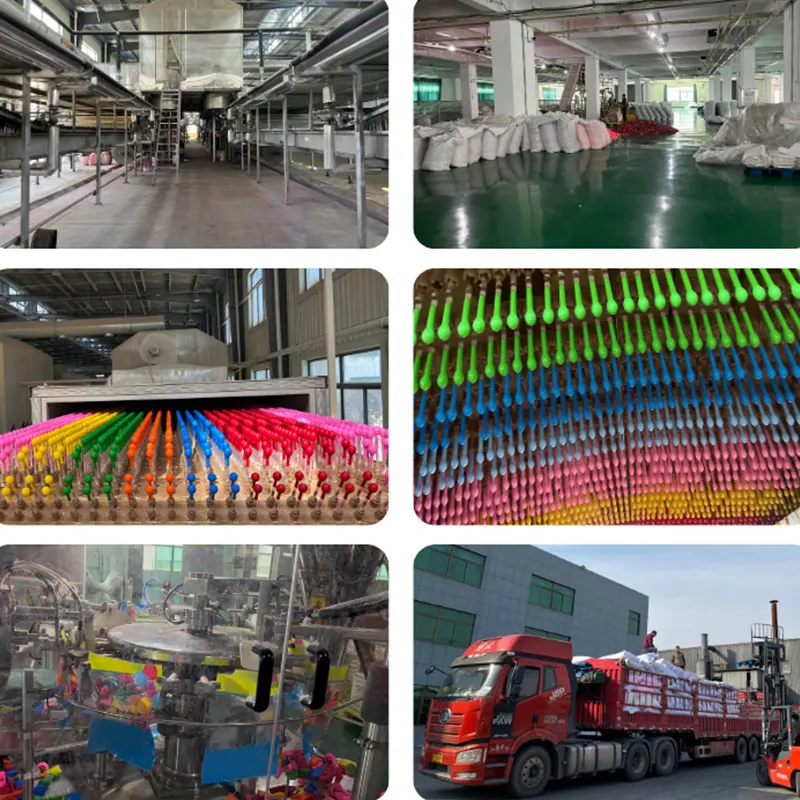
For a wholesale order, a product appearance criterion should identify the specific latex balloon and the approved reference. If the buyer has not yet defined the acceptable finish or color, that requirement remains unapproved rather than automatically passed.
What Functional Requirements Should a Quality Latex Balloon Meet?
A latex balloon that looks correct must also perform under the conditions agreed for the actual product. Air-filled decoration, helium display and professional balloon arrangements can place different demands on the finished balloon.
However, it would be misleading to promise one inflation percentage, one fixed holding time or one helium float duration for every latex balloon size and finish.
| Quality characteristic | What acceptable means | When approval should be withheld |
|---|---|---|
| Inflation behavior | The selected latex balloon reaches its approved inflated form using the agreed method and conditions. | The required size or form cannot be achieved under those conditions, or an unresolved failure occurs. |
| Leakage or air retention | The sample meets an agreed leakage or air-retention requirement if that requirement is part of the purchase specification. | The observed result fails the agreed requirement, or no necessary measurement conditions have been established. |
| Visible surface condition | The finished balloon's color, finish, neck and body meet the approved visual criteria. | Unacceptable tears, holes, deformation or appearance differences are found. |
| Specific end use | The balloon meets requirements established for the customer's approved decoration or retail application. | The supplier substitutes general performance claims for the applicable product sample evidence. |
A burst during inflation does not, by itself, identify whether the cause was a product defect, unsuitable inflation equipment, handling damage or an incorrect inflation target. The finished sample may have failed the agreed requirement, but the cause needs separate investigation.
Buyers should avoid treating a single satisfactory sample as a universal defect-rate guarantee for thousands of balloons. Where lot acceptance requires statistical sampling, the sampling plan and pass/fail conditions must be agreed for the actual purchase.
Define the Acceptance Criteria for Your Latex Balloon Sample
Send Borun Balloon Factory the exact latex balloon size, gram-weight grade, finish, color, intended use and the quality characteristics your purchasing team needs to approve. Ask which physical samples and applicable evidence can support that specification.
Discuss Latex Balloon Sample RequirementsWhich Supplier Claims Need Evidence Before You Call a Latex Balloon High Quality?
Some claims describe product identity, while others require testing, production records or market-specific documentation. A finished balloon should not be accepted because a supplier lists impressive numbers without identifying the tested product and measurement method.
Confirm that the material statement applies to the actual latex balloon being purchased. Do not infer a fixed dry rubber content percentage or performance result without the relevant source record.
Connect the individual balloon weight to the actual size and approved model. The gram-weight value does not establish a universal wall-thickness tolerance.
Identify the physical color reference and comparison conditions. Do not assume a universal numerical Delta E limit applies to every latex balloon finish.
Request the relevant method, test conditions, sample identity and results if the buyer requires a measurable leakage, air-retention or burst-performance claim.
Check the applicable Children's Product Certificate, CE-related documents, relevant EN 71 test reports or declaration of conformity as appropriate to the actual latex balloon and destination market.
Ask which production and inspection records exist for the applicable order. Do not treat complete batch traceability or six-month retained samples as confirmed without evidence.
Borun Balloon Factory provides relevant testing and conformity information for its latex balloon products. The applicable document must still be reviewed for the tested product, covered requirements, report identity and destination-market use. A report for the latex balloon itself does not automatically certify unrelated accessories, customized packaging or a complete assembled balloon set.
For product quality approval, the most useful supplier answer identifies which specific claim is supported by an actual document, which is supported by a physical product sample, and which still needs clarification.
When Does a Wholesale Latex Balloon Meet the Purchase Acceptance Standard?
A finished latex balloon is ready for buyer approval when the relevant criteria have been defined and the available product evidence meets those criteria. Not every application requires the same checks, but essential product specifications cannot be left ambiguous.
The physical product identity is correct, the finished appearance meets the accepted reference, and all required functional and documentation criteria are satisfied.
A key specification, acceptable appearance reference, application condition or required supporting document is unclear or differs from the previously proposed product.
The actual latex balloon fails a required acceptance criterion, or an essential performance or compliance requirement remains unresolved.
Borun's standard wholesale minimum order quantity for latex balloons is 5,000 individual balloons. Physical sample preparation typically takes 3–5 working days where required. Normal production generally takes 5–15 working days after the relevant product and sample approvals.
These are standard purchasing terms, not a universal guarantee of finished-product quality. Color, size, gram-weight grade, printed configuration, packaging and destination requirements must be confirmed for the actual order.
A reliable purchase specification should state the exact latex balloons to be supplied, the physical sample or accepted reference, the buyer's essential pass/fail requirements, and the action needed when any material specification changes.
Request Wholesale Latex Balloons Against Approved Quality Requirements
Send Borun Balloon Factory your balloon sizes and weight grades, color and finish references, quantities by product configuration, required product documents, packaging, destination country and expected delivery date. Include your sample approval requirements so the factory can review the exact purchase.
Send Latex Balloon Wholesale SpecificationsHigh-Quality Latex Balloon FAQ for Wholesale Buyers
Is a heavier latex balloon always higher quality?
No. Gram weight identifies a specific product grade. A heavier balloon must still meet its own approved appearance, inflation and functional requirements. The correct comparison is with the agreed specification for the actual size and model.
What if a supplier quotes the right diameter but a different gram-weight grade?
Treat the proposed weight as a different product configuration. Ask for a revised specification and, where necessary, a representative sample before accepting the substitution in a wholesale latex balloon order.
Does a 9.5g 18-inch Pearl Latex Balloon fail the general 10g reference?
No. The specifically confirmed 18-inch Pearl Latex Balloons SKU has a 9.5g unit weight. Quality must be judged against that SKU's approved 9.5g specification, not another product's 10g reference.
Can a latex balloon pass visual approval but still fail a functional requirement?
Yes. A finished balloon may match the required shape and color but fail a separately agreed inflation or leakage requirement. Both criteria must be met if they are part of the purchase acceptance specification.
Does a CPC or EN 71 report prove that latex balloons will not burst?
No. The relevant documentation addresses the tested products and stated requirements. It does not independently guarantee zero bursting, a fixed helium float duration or the outcome of every wholesale production lot.
Should buyers reject all latex balloons that look lighter when inflated?
No. Stretching changes the appearance of many latex balloon colors. Judge the finished inflated color against the actual approved sample under comparable conditions rather than rejecting a balloon solely because it looks different while flat.
What if a factory cannot provide a particular quality record?
Decide whether that record is essential to the order. If the purchasing requirement depends on the missing evidence, request a suitable alternative, agree on additional verification or hold approval until the requirement is resolved. Do not record an unavailable result as a pass.