Good custom printed balloon quality means that the correct artwork, color, print placement and finished appearance match the approved sample and written specification—and that each balloon material meets its own applicable functional requirements. Printed latex, transparent TPU Bobo and foil balloons cannot be accepted through one identical set of material tests.
For importers, wholesale quality managers, promotional-product distributors and private-label purchasing teams, an inspection should produce a documented decision: accept the result, obtain missing evidence, or hold the affected goods for review. The decision must distinguish visible print defects from construction failures and laboratory compliance questions.
Scope: cross-material custom printed balloon acceptance for wholesale orders. Material-specific manufacturing process audits remain separate from this overview.
- Shared print checksArtwork, print color, placement, legibility and approved reference
- Material checksLatex stretch; TPU transparency and weld; foil seal and valve
- Acceptance basisActual product specification, approved sample and agreed test method
1. What Should Buyers Check on Every Custom Printed Balloon?
Begin with the identity of the finished balloon, not with a defect percentage. A custom logo printed on a latex balloon is not equivalent to the same logo printed on transparent Bobo film or foil film. Product structure influences what is visible, how the balloon is inflated and which failures matter to the buyer.
Borun Balloon Factory manufactures custom printed latex balloons, custom printed Bobo balloons made from transparent thermoplastic polyurethane (TPU), and custom printed foil balloons made from aluminum-coated polyethylene terephthalate (PET) film. Its manufacturing operation is based in Xiongxian, Hebei, China, under Xiongxian Borun Latex Products Co., Ltd. Balloon manufacturing began in 2006.
Five References Needed Before Inspection
The selected latex, TPU Bobo or foil balloon, its size, shape where applicable, base color, printing configuration and production identification.
The correct logo, wording, graphic layout and file revision. The artwork determines what must be present, not how every material will look under all conditions.
The accepted print-color reference, intended viewing direction and approved printed position for the exact material.
An identifiable finished sample or agreed reference used to judge the actual result. Specify whether the controlling appearance is flat, inflated or both.
The defect definitions, inspection conditions, sample selection method and disposition rule agreed before the relevant production lot is inspected.
A quality inspector should be able to show which approved reference supports an observation. If the product size, print side or artwork version cannot be identified, the correct next action is clarification—not an unsupported claim that the batch has passed.
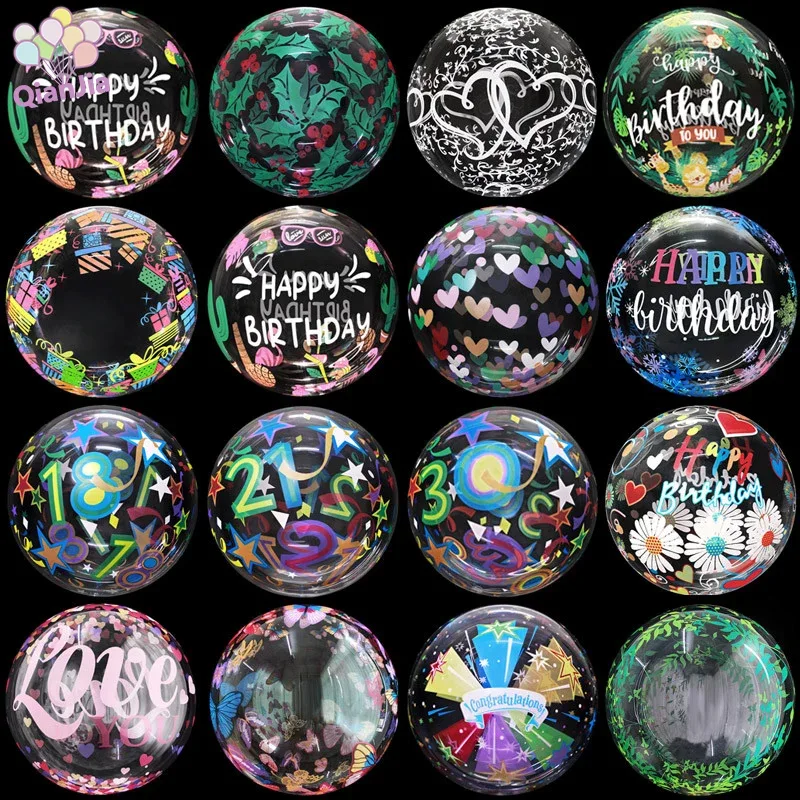
What a Product Photo Can—and Cannot—Establish
A genuine product photograph helps buyers observe the visual presentation of a printed balloon. It can show how artwork appears on transparent TPU, but it cannot establish the material's weld strength, air-retention performance, print adhesion results or batch acceptance outcome.
Likewise, a printed latex balloon photograph cannot prove how a bulk lot behaves after inflation, and a photograph of a foil balloon cannot verify its self-sealing valve.
For printed latex orders, the custom printed latex balloon manufacturing specifications provide the underlying balloon sizes, printing options and purchasing conditions. Those product specifications should be paired with the buyer's own accepted sample and quality instruction.
2. How Should Print Color, Placement and Adhesion Be Verified?
Artwork identity, brand color, print position and clarity are shared inspection topics across all three balloon materials. What changes is the way the finished result is observed and whether a proposed durability check is appropriate to the actual material and ink system.
Artwork and Position
Compare the finished balloon with the approved artwork version and actual print layout. Inspect text, orientation, print location and the required printed faces.
Color and Visibility
Use the agreed color reference and comparable lighting. Also consider the selected balloon base, transparency and intended inflated appearance.
Print Condition
Look for missing artwork, smearing, visibly merged details or other departures from the approved sample. Assess adhesion only through a method agreed for that printed material.
Shared Printed-Appearance Inspection Matrix
| Inspection item | Reference | What is examined | When further review is needed |
|---|---|---|---|
| Correct artwork | Approved design revision | Logo, text, graphic elements and orientation | Wrong or unidentifiable version; important design element missing |
| Printed color | Agreed color reference and physical sample | Visible printed color under comparable viewing conditions | Color cannot be confirmed because the reference or evaluation condition differs |
| Print position | Approved layout and selected balloon | Placement, viewing direction and required printed faces | Position conflicts with the approved presentation |
| Edge and readability | Approved finished print | Required text, outlines and logo details remain recognizable | Smearing, loss of required detail or materially different legibility |
| Ink or print adhesion | Agreed material-specific test method and result criteria | Whether the printed surface meets the actual required handling or use condition | Method, conditioning, acceptance result or applicability is missing |
| Production consistency | Approved sample, lot identity and sampling plan | Sampled finished units compared with the agreed product and artwork references | Repeated deviations, mismatched sample identity or unclear lot disposition |
Adhesion is not one universal test: a cloth-rub result, tape test or stretched-print observation has meaning only when its procedure and acceptance criteria fit the actual substrate and printing configuration. Borun does not need an invented “20 rubs,” universal 900% ink-stretch claim or fixed pass rate to explain the correct purchasing requirement.
Screen printing or digital printing may be selected according to the approved artwork and balloon material. Where Borun's individual product pages state up to six defined printing colors, this describes the relevant custom printing capability; it does not guarantee identical color appearance or print performance across latex, TPU and foil.
Clarify a Custom Printed Balloon Quality Standard Before Sampling
Send Borun the balloon material, exact size, current artwork, print colors, intended viewing or inflation condition and the characteristics requiring acceptance evidence. Ask which physical sample and test method apply to the selected product.
3. Which Quality Standards Cannot Be Shared Across Latex, TPU Bobo and Foil Balloons?
The most consequential mistake is transferring a useful inspection from one material to another without checking whether that feature exists or behaves in the same way. A latex balloon expands substantially during normal use, while transparent TPU and foil balloons have different film constructions and sealing requirements.
Material-Specific Acceptance Matrix for Wholesale Custom Printed Balloons
| Balloon material | Print appearance check | Separate functional check | Standard not to transfer | Acceptance evidence |
|---|---|---|---|---|
| Custom Printed Latex Balloons | Logo proportion, placement, edge definition and readability after agreed inflation | Balloon condition, inflation behavior and relevant leakage or visible forming checks | Do not require foil heat-seal or self-sealing valve inspection on a standard latex balloon | Approved printed and inflated sample; relevant latex specification and agreed inflation conditions |
| Custom Printed TPU Bobo Balloons | Graphic contrast and position against the transparent surface; visibility from intended viewing directions | Weld-line condition, surface bubbles where relevant, inflation and air-retention behavior | Do not copy latex stretch-print acceptance or assume every Bobo has a separate foil-type valve | Approved TPU Bobo sample, weld reference, print reference and defined functional inspection |
| Custom Printed Foil Balloons | Printed color, surface appearance, graphic registration and placement on aluminum-coated PET film | Heat-sealed edge condition, inflation valve where fitted, inflated shape and agreed retention behavior | Do not use latex elongation as a foil print-quality criterion or judge foil sealing solely by artwork appearance | Approved foil sample, seal and valve inspection evidence, relevant functional test results |
Custom printed latex balloons are manufactured from pure natural latex. The printed artwork must be judged at the specified inflation condition where the intended use requires it. A logo that looks acceptable while the balloon is uninflated can change in proportion or readability when the latex stretches.
Buyer decision: identify the balloon size and approved inflated print appearance. Do not impose foil-film seal criteria on an ordinary latex balloon.
Custom printed Bobo balloons use transparent TPU film. Quality includes both the intended graphic visibility and the balloon's physical construction. Weld-line consistency, visible bubbles and inflation performance require their own references rather than being interpreted as ordinary latex print defects.
Buyer decision: compare the actual transparent finished balloon against an approved sample, then check any defined weld and air-retention conditions separately. The custom printed TPU Bobo balloon specifications establish the relevant commercial product configuration.
Custom printed foil balloons use aluminum-coated PET film. The printed graphic must match the approved design, but a visually acceptable printed surface does not prove that the sealing edge or inflation valve will function correctly.
Buyer decision: verify print requirements and separately evaluate seal integrity, valve function where applicable, final inflated shape and any agreed leakage or retention test.
For all three balloon materials, the manufacturer and importer should agree on the actual finished product being checked. Certification documents and laboratory tests must also cover the relevant product and destination-market requirements; a passing visual print inspection does not establish regulatory conformity.
4. How Should Wholesale Buyers Record Inspection Results and Release a Lot?
A useful inspection record connects the inspected goods with their approved product specification. It also separates an individual observation from the disposition of the entire production lot. The following form demonstrates which fields a buyer should request or record; it does not represent an actual Borun quality-control report.
Cross-Material Inspection Record — Illustrative Format
REFERENCE TEMPLATE · NOT A TEST RESULTApprove, Recheck or Hold: Three Distinct Decisions
Approve
The required inspected characteristics meet the agreed criteria, and the sample results support acceptance of the defined lot under the approved plan.
Recheck
A difference is observed, but the correct reference, test condition, extent or significance has not yet been established.
Hold
A requirement is demonstrably unmet, a critical functional condition remains unresolved, or the inspection record cannot support release under the agreed procedure.
A single defective-looking balloon does not automatically establish the condition of every balloon in a wholesale lot. Conversely, checking one acceptable unit does not prove that the whole lot passes. The sampling method, lot size, defect classification and accept-or-reject numbers must be defined before a representative sample can determine lot acceptance.
If a buyer uses a statistical acceptance sampling system such as Acceptance Quality Limit (AQL), its inspection level and acceptance criteria require agreement for the actual product and risk. The same numerical tolerance or defect class should not be assumed to apply to cosmetic printing differences, TPU weld failure and foil valve malfunction.
Laboratory and regulatory evidence is separate: requirements involving material composition, chemical migration, applicable toy safety testing or destination-market declarations must be checked against the actual product and document scope. An inspector cannot establish EN71-3 compliance merely by looking at the printed surface, and an unrelated product certificate is not proof of the inspected batch.
Borun Balloon Factory supports custom printed latex, Bobo and foil balloon production, with order-specific artwork review, sampling and manufacturing inspection. Typical custom print orders begin at 5,000 pieces per design for the applicable product programs, with production normally requiring 5–15 working days after the necessary specification and approvals. The exact sample schedule can differ by material and project.
For retail or private-label supply, also record the pack contents, labels and carton arrangement. Customized balloon packaging is coordinated by Borun through an affiliated packaging factory; packaging production should not be attributed to Borun's balloon manufacturing lines.
Request a Material-Specific Printed Balloon Quality Review and Bulk Quotation
Submit the product material, balloon size, artwork, quantities per design, accepted sample, packaging requirements, destination market and any required inspection or test records. Borun can review the relevant manufacturing and commercial conditions before the order proceeds.
Frequently Asked Questions About Custom Printed Balloon Quality
What are the most important quality checks for custom printed balloons?
Verify the correct finished balloon, approved artwork, print color, placement, legibility and physical sample. Then perform the functional checks that apply to the exact latex, TPU Bobo or foil construction.
Can the same quality acceptance standard be used for printed latex, Bobo and foil balloons?
The reference-based inspection process can be shared, but the material-specific tests cannot all be identical. Latex print appearance changes with inflation; transparent TPU Bobo balloons require relevant weld and transparency checks; foil balloons require appropriate seal and valve checks.
Should a printed latex balloon be inspected after inflation?
Yes, where the finished inflated appearance is part of the approved requirement. Compare the logo's size, proportion, placement and readability with the appropriate inflated physical sample.
Does a visually correct printed Bobo balloon automatically pass quality inspection?
No. Correct printing alone does not prove weld integrity, inflation performance or the suitability of any relevant surface variation. Those characteristics need their own agreed inspection conditions.
What must be checked on a custom printed foil balloon besides the logo?
Review the foil-film condition, sealed edges, valve function where applicable and inflated result. These are separate from printed color and artwork accuracy.
Can one failed sample justify rejecting an entire wholesale lot?
That depends on the defect, agreed inspection method and lot acceptance rule. An isolated observation may require reinspection, while certain defined failures may require holding affected goods. Do not invent a universal lot-rejection rule after inspection.
Are product safety certificates a substitute for printed-balloon quality inspection?
No. A relevant report or declaration may support specified safety or regulatory requirements within its scope, but it does not establish the printed appearance, packaging accuracy or functional result of the particular production lot.
Wholesale quality conclusion: custom printed balloon acceptance should begin with the same approved product and artwork references, then follow the inspection methods appropriate to the actual balloon material. A buyer can compare printed appearance across latex, TPU Bobo and foil—but must judge stretching, welded construction, heat seals and valves only where those characteristics apply. Documenting that distinction makes sample approval and finished-lot decisions clearer for both the buyer and manufacturer.