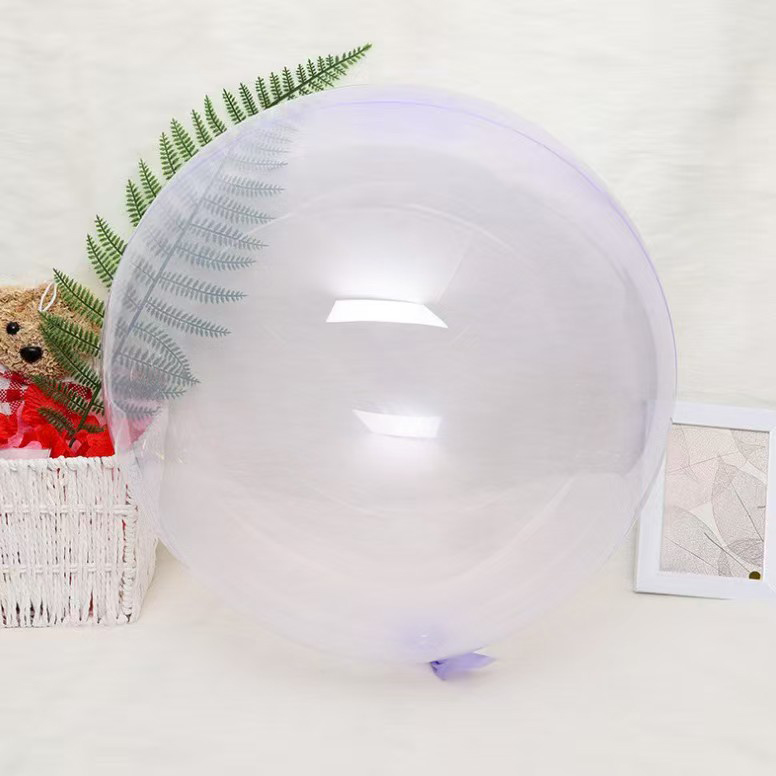
To reduce seam-splitting risk in wholesale crystal clear TPU Bobo balloons, check the actual sealed edge, confirm product-specific inflation conditions and approve representative samples before bulk production.
A clear Bobo balloon can look great in a catalog photo and still need careful seam checking before a wholesale order. The important question isn't simply whether the balloon inflates. It's whether the joined TPU edge holds together under the conditions agreed for that exact product.
Borun Balloon Factory supplies NiuN® crystal clear Bobo balloons made from thermoplastic polyurethane (TPU). For balloon importers, party-supply wholesalers and event suppliers, reducing seam-splitting risk starts with the correct balloon construction, a suitable joining process and a physical sample that has been checked before mass production.
Why Do Clear TPU Bobo Balloon Seams Split?
There are two different problems buyers often describe as a “split seam.” In one case, the two joined TPU film edges actually separate. In another, the film tears close to the joint while the joined area itself may still be attached. Those problems can look similar, but they do not necessarily have the same cause.
For wholesale blank transparent TPU Bobo balloons, inspect the joined perimeter, rounded body and neck-to-body transition on the exact size you intend to buy. A normal-looking seam line or fold is not automatically a structural failure.
- What is a real seam split?
- A visible opening where previously joined TPU film edges have separated.
- What is a film tear?
- A break in the TPU film beside the joined edge, which may need a different investigation.
- What must match?
- Actual balloon size, film and seam construction, approved inflation method and intended use.
- What should the buyer decide?
- Whether the physical sample can be approved, needs a controlled recheck or requires a revised manufacturing sample.
What Can Manufacturers Do to Reduce Seam-Splitting Risk?
Preventing a split starts before a buyer inflates a sample. The balloon manufacturer needs a joining process suited to the selected TPU film and balloon construction. Then the finished seam needs checking under the conditions the product is meant to handle.
-
Match the joining method to the actual TPU film and seam design.
Film type, construction, joint shape and equipment setup all matter. A process suitable for one Bobo balloon size or shape should not automatically be accepted for every other model. Ask the manufacturer how suitability is confirmed for the selected product.
-
Check how the TPU film meets along the sealed edge.
The joined area needs consistent contact and suitable process conditions. Dirt, trapped material, misalignment or incomplete bonding are possible risks that a manufacturer should evaluate. They are not proven causes of any specific Borun sample without supporting evidence.
-
Review the neck-to-body transition as its own construction area.
The product geometry changes near the inflation neck. If the planned use involves inserting decorations, attaching accessories or handling the neck repeatedly, check that the exact opening and construction are suitable for that use.
-
Confirm the conditions the finished balloon is designed to handle.
Inflation target, equipment, temperature and handling can affect the result. The buyer and manufacturer should agree on the test conditions for the exact product before comparing samples.
-
Check representative production samples before approval.
Look at the finished seam in both uninflated and approved inflated form. If a seal-strength test is needed, agree on an applicable method, specimen preparation and acceptance requirement instead of using an invented industry number.
About factory welding parameters: The approved heat, pressure, cycle time or other joining settings for a specific Borun TPU Bobo balloon have not been independently verified for this article. These variables describe areas a manufacturer may need to control; the article does not claim Borun uses a particular machine setting or that one setting prevents every split.
Is the Problem in the Joined Seam, the Film or the Inflation Method?
Here's where photographs and test notes become useful. A buyer should describe what actually happened first, then request the records needed to investigate it. Don't blame the factory's sealing equipment or the person inflating the balloon just because a problem appeared during inflation.
| What you see | What may need checking | Evidence to request | Next purchasing action |
|---|---|---|---|
| Two joined film edges open along the seam | Joint formation, contact, material compatibility and the agreed sample inflation conditions | Exact seam close-up, balloon size, sample version, inflation record and available joining-process information | Do not approve the affected sample; request manufacturer review and a corrected or repeat sample |
| TPU film tears beside an apparently joined seam | Film damage, local strain, edge geometry, handling and inflation conditions | Tear location, film and seam photographs, handling notes and actual sample configuration | Ask for a product-specific investigation; do not assume the weld itself failed |
| Damage appears around the inflation neck | Nozzle fit, opening dimensions, neck handling and actual seam location | Neck detail, inflation tool, approved target form and handling observations | Check the intended assembly method and retest only under agreed conditions |
| Visible seam line but no actual opening | Approved appearance reference and whether the joined edge remains intact | Uninflated and inflated photos against the approved sample | Clarify the visual acceptance reference rather than recording an unconfirmed split |
Keep temperature records specific. A workshop sealing-temperature setting is not the same as storage temperature or the temperature around a balloon during inflation. If none of those readings is available, mark it as missing rather than inserting an assumed value.
Need a Clear TPU Bobo Balloon Seam Sample Reviewed?
Send Borun Balloon Factory the exact Bobo balloon size, blank or custom configuration, intended use, photographs of the affected area and the inflation conditions used. Ask which product-specific sample checks and manufacturing evidence are available.
Discuss Transparent Bobo Balloon Seam RequirementsHow Should Buyers Check Samples Before Bulk Production?
A simple sample review can tell you whether the proposed transparent TPU Bobo balloon is ready for approval. It cannot prove the failure rate of an entire future order. Agree on sample quantity and acceptance rules with the manufacturer before starting.
Record the balloon size, TPU construction, sample version and intended configuration. Inspect the full joined edge and neck, then photograph any suspected damage before using the sample.
Use the agreed tool, target inflated form and method for that exact Bobo balloon. Record the relevant room conditions and any handling or stretching performed. Stop if a real opening develops or extends.
Compare the seam and inflated shape with the approved reference. Note whether the joint stayed intact and whether the required form was reached under the agreed conditions.
Keep the product reference, sample count, dates, photographs, inflation notes, observed results, responsible reviewer and the buyer's written approval or correction request.
When you need a more formal seam-strength measurement, the laboratory and factory should first agree on a method appropriate to the actual TPU Bobo balloon joint. A result from an unrelated flexible package test cannot simply be copied into a Bobo balloon specification.
When Is a Clear Bobo Balloon Ready for Wholesale Production?
Approval should depend on what the actual samples show and what the buyer agreed to accept. A good-looking balloon made from TPU is not enough on its own.
The correct product was checked under agreed conditions, the joined edge met the approved acceptance requirement and the result has been recorded.
The actual seam location, product construction, test conditions or photographs are incomplete, or the manufacturer has proposed a change that has not yet been approved.
A confirmed seam split remains unresolved, the corrected sample has not been approved or a required test cannot be supported by the available evidence.
Borun Balloon Factory supplies blank transparent TPU Bobo balloons in standard sizes including 10, 18, 20, 24 and 36 inches. Stock orders start from 100 individual balloons when the requested configuration is available. Custom printed TPU Bobo balloon orders generally start from 5,000 individual balloons per design, with normal production taking 5–15 working days after the required approvals.
Those commercial terms do not prove seam strength. If the requested order changes balloon size, shape, material specification or an accessory arrangement that places stress near the neck, ask whether a new representative physical sample is required.
Request a Wholesale Crystal Clear TPU Bobo Balloon Quote
Tell Borun Balloon Factory the required balloon size, blank or printed specification, quantity by model, intended use, packaging and destination country. Include the agreed seam inspection requirements, sample results and any changes needing approval before production.
Send Transparent TPU Bobo Balloon RFQSample approval and any production evidence should be confirmed for the specific Bobo balloon order.
Wholesale Clear TPU Bobo Balloon Seam FAQ
Can a visible line on a transparent Bobo balloon be mistaken for a split?
Yes. A normal joined edge or fold may be visible through clear TPU. A confirmed split requires evidence of an actual opening or separation, judged against the agreed product reference.
Does the same seam approval apply to every transparent Bobo balloon size?
Not automatically. A different balloon size or shape can change the construction and the conditions used during inflation. Ask whether the manufacturer needs another representative sample before approving the new configuration.
Should a wholesale buyer ask for one fixed heat-sealing temperature?
No universal joining temperature can be assumed for every TPU Bobo balloon. Ask what manufacturing method and evidence apply to the selected film, joint design and production setup, rather than requesting an unsupported number.
What if Borun cannot provide an actual seam failure photograph?
Do not invent one or substitute a normal product picture. Ask for fresh photographs of the real sample being evaluated and record the inspection conditions. Hold any decision that depends on missing evidence.
Can one split sample prove that every balloon in a wholesale order is defective?
No. It establishes a failure in the inspected sample under the recorded conditions. Any decision about the wider production quantity needs an agreed sampling and acceptance plan.
Does a custom printed Bobo balloon need a new seam review?
If the balloon size, shape or joined construction changes, confirm whether a new physical sample is needed. Approval of one blank transparent TPU Bobo balloon does not automatically approve every printed or specially shaped configuration.